Key Takeaways
- Macro Mixed: Higher yields, FX intervention, and lower oil supporting risk assets.
- Rotation: Capital is rotating into software while BTC remains decoupled from IGV.
- Crypto Headwinds: Coldcard fallout, MSTR selling, weak ETF flows, and seasonality.
Digital Asset Commentary
Yields have risen back to levels that previously prompted a policy response through a reversal in tariff policy. Adding to the complexity, the US Treasury and the Bank of Japan reportedly conducted a coordinated currency intervention to support the USD/JPY pair. Japan holds roughly $1.14 trillion in US Treasuries, and absent US participation, the BOJ may have been forced to sell Treasuries to support the yen. The US side of the intervention likely involved selling euros and buying yen to reinforce the effort.
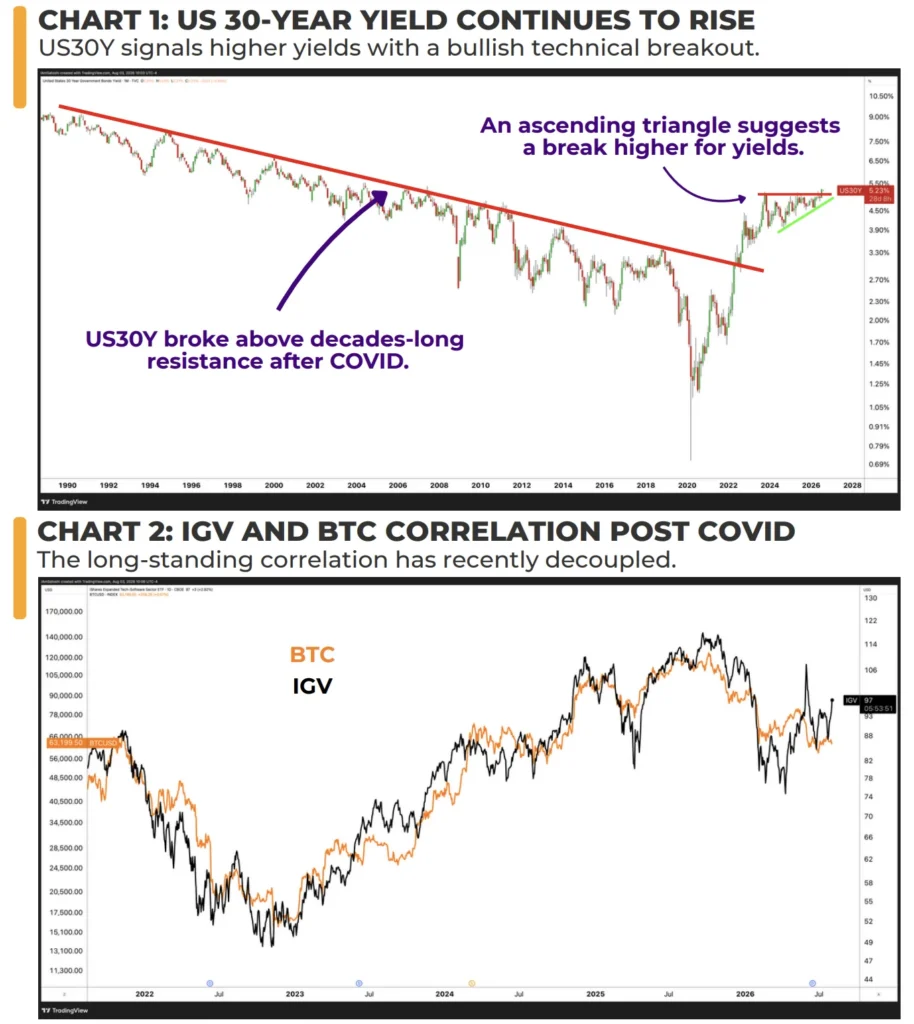
The on-again, off-again Iran peace narrative continues. President Trump has suggested Iran wants to negotiate and that a deal is close, while Iranian officials have denied those claims. Meanwhile, traffic through the Strait of Hormuz remains officially near zero. Despite the absence of a confirmed peace agreement, oil fell 6% this morning, providing a tailwind for risk assets. Software has been the primary beneficiary, enjoying a second tailwind as capital rotates out of semiconductors following their recent rollover, while software shorts have also come under pressure. Historically, BTC has exhibited a strong correlation with IGV, the software ETF. That relationship broke down in May and has yet to reassert itself.
Recent weakness in BTC has also been exacerbated by the Coldcard hardware wallet exploit, where a flaw in private key generation made wallet seeds predictable rather than truly random. Estimates now place losses at roughly $114 million, with the total continuing to rise. Additional selling pressure has come from Michael Saylor’s Strategy (MSTR), which has continued selling BTC while issuing STRC to support the preferred security’s $100 trading level. Spot ETF flows for both BTC and ETH have remained largely flat, while CME Commitment of Traders data continues to show commercial participants maintaining sizable net-short positions. Taken together with unfavorable seasonal trends for both crypto markets and the US midterm cycle, the macro backdrop suggests meaningful bullish momentum is unlikely to emerge before Q4.